The modern kitchen is a hub of innovation, brimming with appliances designed to streamline meal preparation. Among the most common are the blender and the food processor, often viewed as distinct tools. Yet, many home cooks ponder a crucial question: can a blender truly step up and replace a food processor? This article delves into the capabilities and limitations of using your blender for food processing tasks, helping you maximize its utility and decide when it’s the right tool for the job.
The Versatile Kitchen Companion: Understanding the Food Blender
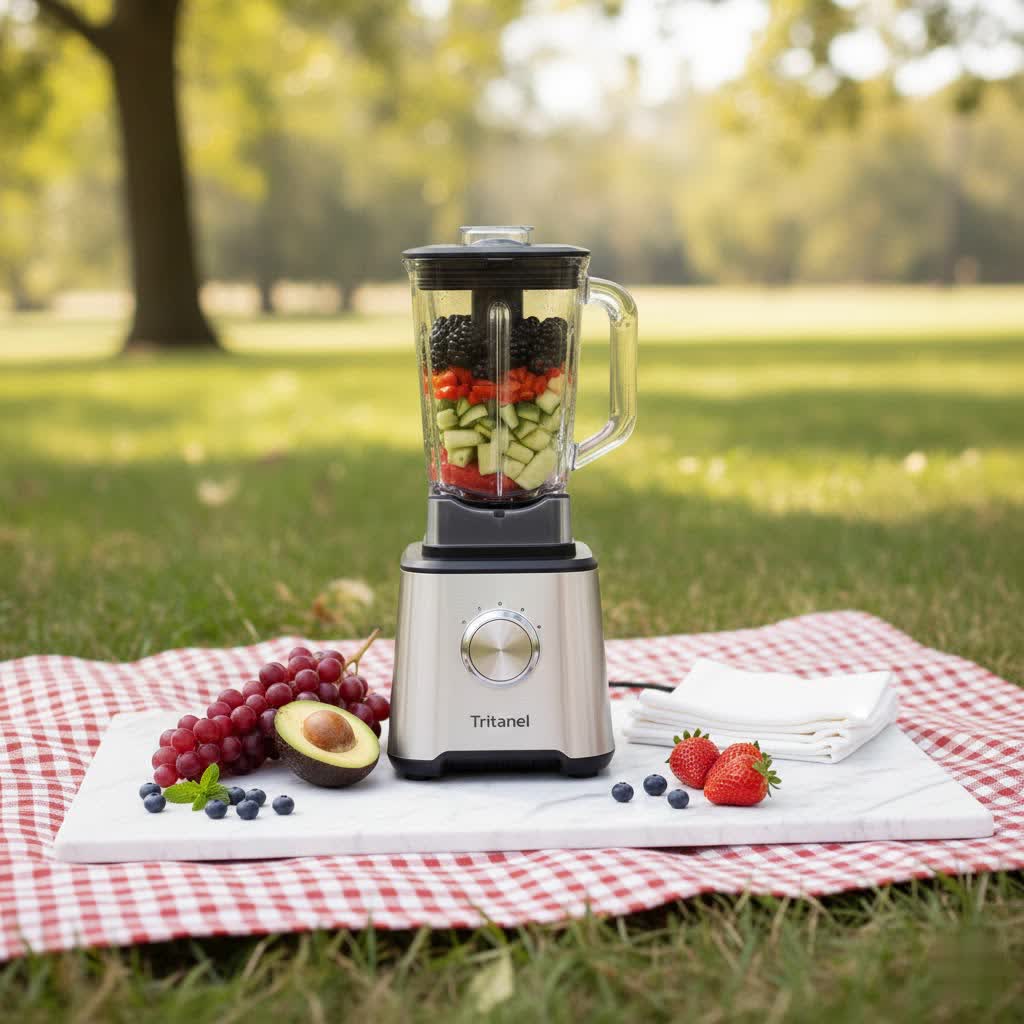
At its core, a food blender is engineered to liquefy and create smooth mixtures. Its tall, narrow jar and fixed blades, typically angled upwards, work by generating a powerful vortex that pulls ingredients down, ensuring everything is thoroughly blended into a consistent liquid or creamy purée. This design makes blenders indispensable for crafting silky smoothies, velvety soups, smooth sauces, and emulsified dressings. While immersion blenders offer direct blending in pots or bowls, traditional jug blenders are countertop powerhouses, often capable of crushing ice and handling frozen fruits with ease thanks to their robust motors and multiple speed settings. The evolution of blenders has seen them become more powerful and versatile, leading to the natural inquiry of whether they can extend their utility beyond liquids.
Food Processor Capabilities: What a Blender Aims to Mimic
In contrast to blenders, a food processor is the ultimate multi-tasker for solid food preparation. Equipped with a wider work bowl and an S-shaped blade that sweeps across the base, food processors excel at chopping, slicing, shredding, grating, and even kneading dough. They often come with various interchangeable discs and blades specifically designed for these distinct functions, offering precise and uniform results. The wider bowl and slower, more controlled blade rotation allow for better handling of drier, thicker ingredients without turning them into a liquid. When you need to finely dice vegetables, shred cheese, or create a perfectly textured pesto, the food processor is typically the tool of choice, saving significant time and effort compared to manual methods.
When Can Your Blender Step Up as a Food Processor? (Acceptable Substitutions)
While a blender isn’t a direct replacement, it can certainly handle several food processing tasks, especially with the right technique. The key is to understand its strengths and how to work around its primary design for liquids.
Chopping Nuts, Breadcrumbs, and Herbs
|
Our Picks for the Best Food Blender in 2026
As an Amazon Associate I earn from qualifying purchases.
|
||
| Num | Product | Action |
|---|---|---|
| 1 | BLACK+DECKER PowerCrush Multi-Function Blender with 6-Cup Glass Jar, 4 Speed Settings, Silver |

|
| 2 | Hamilton Beach Power Elite Wave Action Blender For Smoothies, 40 Oz Glass Jar, 12 Functions Including Puree, Crush Ice, 700 Watts - Black (58148A) |
|
| 3 | Vitamix Ascent X5 Blender with 10 Blending Programs, Self-Cleaning Program, Professional-Grade Blender for Smoothies, Soups and More, Stainless-Steel Blades, 48 Oz Container, Brushed Stainless |
|
| 4 | Countertop Blender, 2000W High-Power Smoothie Blender with 68oz BPA-Free Jar, 28,000 RPM, Variable Speed & Pulse, 8-Blade Stainless Steel, Tamper Included, Quick Self-Cleaning, Dishwasher-Safe Jar |
|
| 5 | Turelar Immersion Blender Handheld Corded Hand Blenders Set 1100W, Trigger Variable Speed 5 in 1 Stick Emulsifier with Chopper, Whisk and Frother for Soup, Baby Food and Smoothies |
|
| 6 | Vitamix Explorian E310 Blender, Professional-Grade Kitchen Blender for Smoothies, Soups, Juices and More, 10-Speed, Stainless Steel Blades, Self-Cleaning Kitchen Appliance, 48 Oz Container, Black |
|
| 7 | Ninja Professional Blender 1000W, Total Crushing Technology- Smoothies, Ice Crushing & Frozen Fruit, Full-Size Countertop Blender, 72-oz. Pitcher, Black & Grey, BL610 |
|
| 8 | Ninja Mega Kitchen System, 1500W, 72 oz. Full-Size Blender & 8-Cup Food Processor with (2) 16 oz. Cups , Black, BL770 |
|
| 9 | BLACK+DECKER Countertop Blender with 6-Cup Glass Jar, 10-Speed Settings, Black, BL2010BG |
|
| 10 | Ninja Fit Compact Personal Blender, Portable Blender for-Smoothies, Shakes, Food Prep, and Frozen Blending, 700-Watt Base, (2) 16-oz. Cups and Spout Lids, Black QB3001SS |
|
For tasks like chopping nuts for baking, making fresh breadcrumbs, or roughly mincing herbs, a blender can be surprisingly effective. The “pulse” function is your best friend here, allowing you to control the blade’s rotation in short bursts. Add small quantities of ingredients to avoid over-processing. For herbs, ensure they are dry to prevent them from becoming a bruised paste. You might need to shake the blender jar or use a tamper to push ingredients towards the blades, as they tend to stick to the sides. The chop may not be as uniform as with a food processor, but it gets the job done quickly.
Dry Chopping Small Batches of Vegetables
Need to chop an onion or some carrots for a soup or sauce? A blender can help, but precision is sacrificed for speed. Cut vegetables into small, uniform chunks before adding them to the blender. Again, use the pulse function in short bursts, checking the consistency frequently. Avoid overfilling the jar, as this can lead to uneven chopping – some pieces may be pulverized while others remain largely intact. This method is best for dishes where the exact uniformity of the chop isn’t critical, such as stews or puréed vegetable bases.
Making Dips and Spreads
For thick dips like hummus or bean spreads, a high-powered blender can often deliver a wonderfully smooth consistency. While a food processor might handle this with less liquid, blenders can achieve an exceptionally creamy texture. Start with liquids or softer ingredients at the bottom to help create the vortex, then gradually add thicker components. For pesto, a blender can make a very smooth version, though some prefer the coarser texture achieved by a food processor.
Crafting Nut Butters
High-performance blenders are excellent for making homemade nut butters. Their powerful motors can break down tough nuts into a smooth, creamy butter. This usually requires patience and frequently scraping down the sides of the jar, or using a tamper if your blender has one, to keep the nuts moving into the blades. While food processors can also make nut butter, blenders often excel at creating ultra-smooth varieties.
The Limitations: When a Blender Falls Short of a Food Processor
Despite its versatility, a blender has inherent limitations that prevent it from fully replacing a food processor for certain tasks. These drawbacks are mainly due to its design, which is optimized for liquefying rather than precision cutting or handling dry, dense ingredients.
No Slicing, Shredding, or Grating
The most significant limitation is a blender’s inability to slice, shred, or grate. Unlike food processors that come with various interchangeable discs for these functions, blenders only have one set of fixed blades designed for chopping and blending. If your recipe calls for uniformly sliced cucumbers, shredded cabbage for coleslaw, or grated cheese, a blender simply cannot perform these tasks. Attempting to force ingredients through could damage the blender or produce unusable results.
Ineffective for Kneading Dough or Thick Batters
The narrow jar and high-speed blades of a blender are unsuitable for kneading dough or mixing very thick batters. A blender’s motor would likely overheat, and the dough would either get stuck around the blades or simply not mix properly due to the lack of space and the absence of a proper dough blade. Food processors, with their wider bowls and specialized dough blades, are designed to handle these heavy-duty tasks with ease.
Uneven Chopping and Over-processing
While a blender can chop, it struggles to achieve the uniform, consistent chop that a food processor delivers, especially with larger quantities or drier ingredients. Its tendency to create a vortex often means ingredients at the bottom are liquefied while those at the top remain chunky. It’s also very easy to over-process ingredients in a blender, quickly turning a desired chop into a purée or liquid. This lack of control makes it less ideal for recipes where a specific texture (like a coarse chop for salsa or finely diced vegetables for a stir-fry) is crucial.
Challenges with Dry, Solid Ingredients
Blenders perform best when there’s sufficient liquid to create the necessary vortex. For large amounts of dry, solid ingredients (e.g., tough vegetables, hard cheeses, large quantities of nuts for flour), a blender will struggle. The ingredients may simply bounce around the blades, failing to get processed efficiently and potentially putting strain on the motor. A food processor, with its wide bowl and powerful S-blade, is specifically designed to handle these types of ingredients without needing any liquid.
Essential Considerations When Choosing a “Food Processor Blender” (Buying Guide)
If you’re looking for an appliance that can handle both blending and some food processing tasks, consider these key criteria:
Power and Speed
A blender with a high-wattage motor and multiple speed settings, including a powerful pulse function, will be more capable of mimicking a food processor. Higher power helps break down tougher ingredients more effectively and offers better control over texture when pulsing. Look for models explicitly designed for heavy-duty tasks like crushing ice or making nut butter.
Blade Design and Attachments
While all blenders have fixed blades, some advanced models or systems come with specific attachments that enhance their food processing capabilities. These might include smaller chopping cups or dedicated food processor attachments that sit on the blender’s motor base. These specialized accessories bridge the gap, offering greater versatility than a standard blender jar.
Jar/Bowl Material and Capacity
Consider the design of the blender jar itself. Tall, narrow jars are excellent for liquids, but a slightly wider base can sometimes be more forgiving for chopping solids. Look for durable, heat-resistant materials like glass or high-quality BPA-free plastic. Capacity is also important; while blenders can handle small batches of solids, a larger capacity jar might be useful if you frequently chop bigger quantities for family meals.
Durability and Safety Features
Investing in a well-built appliance ensures longevity. Look for sturdy construction, robust motor housing, and reliable blade assembly. Safety features like overload protection (which automatically shuts off the motor to prevent damage) and secure locking mechanisms are crucial.
Brand and Price Point
Reputable brands often offer higher quality and better performance. While high-end blenders can be a significant investment, they generally provide superior power and durability, making them more capable of handling diverse tasks. Consider your budget and how frequently you anticipate using the appliance for food processing before making a decision.
Maximizing Your Blender’s Potential: Usage and Maintenance Tips
To get the most out of your blender when using it for food processing tasks, proper technique and care are essential.
Master the Pulse Function
The pulse button is your most important tool. Instead of continuous blending, use short, quick pulses. This allows you to control the chop size, preventing ingredients from turning into a purée. Check the consistency after each pulse.
Work in Small Batches
Overloading the blender is the fastest way to get uneven results or strain the motor. When chopping solids, process small quantities at a time. This ensures that all ingredients come into contact with the blades and are processed more evenly.
Prepare Ingredients Properly
Cut ingredients into uniform, manageable pieces before adding them to the blender. This helps the blades work more efficiently and reduces the likelihood of larger chunks being left unprocessed. For dry chopping, ensure ingredients are as dry as possible to prevent them from sticking or turning into a paste.
Use a Tamper (If Available)
Many high-performance blenders come with a tamper, a tool used to push ingredients towards the blades while the blender is running. This is incredibly useful when processing thicker mixtures or solids that tend to cling to the sides of the jar, ensuring a more consistent result without adding extra liquid.
Cleaning and Care
Always clean your blender immediately after use. Disassemble removable parts and wash them with warm, soapy water. For sticky residues, a quick blend with warm water and a drop of dish soap can often do the trick. Ensure the motor base is kept dry. Regular maintenance extends the life of your appliance and keeps it ready for your next culinary adventure.
Conclusion
While a blender might not completely replace a dedicated food processor, it is far more versatile than just a smoothie maker. By understanding its design strengths and limitations, and employing smart techniques like pulsing and working in small batches, your blender can competently handle many chopping, puréeing, and grinding tasks. It’s an excellent choice for those with limited kitchen space or budget, offering a convenient solution for daily food preparation. However, for precise slicing, shredding, kneading dough, or processing large quantities of dry ingredients, a food processor remains the unparalleled master. Ultimately, choosing between the two, or investing in a blender with food processing attachments, depends on your specific cooking needs and culinary aspirations.
Frequently Asked Questions
Can I use my blender to chop onions and garlic?
Yes, you can use a blender to chop onions and garlic, especially for recipes where a perfectly uniform dice isn’t critical. Cut them into small pieces first and use the pulse function in short bursts to avoid turning them into a paste.
Is it safe to make nut butter in a regular blender?
While high-powered blenders excel at nut butter, a regular blender can also make it, but it may require more time, frequent scraping, and might strain the motor. Ensure your blender has a strong motor and use a tamper if possible.
What’s the main difference in results between chopping in a blender versus a food processor?
The main difference is consistency and control. A food processor typically provides a more uniform, precise chop with less risk of over-processing. A blender, due to its vortex action and higher blade speed, can easily over-process to a purée and may yield less consistent results with solids.
Can a blender slice or shred vegetables like a food processor?
No, a standard blender cannot slice or shred vegetables. These functions require specific disc attachments that are found only on food processors. Some blenders may offer a chopping attachment, but it won’t provide uniform slices or shreds.
What should I absolutely NOT try to do in a blender that a food processor can do?
You should absolutely avoid trying to knead dough or slice/shred ingredients in a standard blender. These tasks are beyond a blender’s design capabilities and can damage the appliance or result in unsatisfactory outcomes.
