In the dynamic world of culinary creations, kitchen appliances play a pivotal role in transforming raw ingredients into delicious meals. Two stalwarts, the food processor and the blender, often stand side-by-side, each lauded for its unique capabilities. But what happens when you only have one, or seek to maximize the utility of your existing equipment? Many home cooks ponder if their trusty food processor can step into the blending arena, offering the smooth purees and creamy textures typically reserved for blenders.
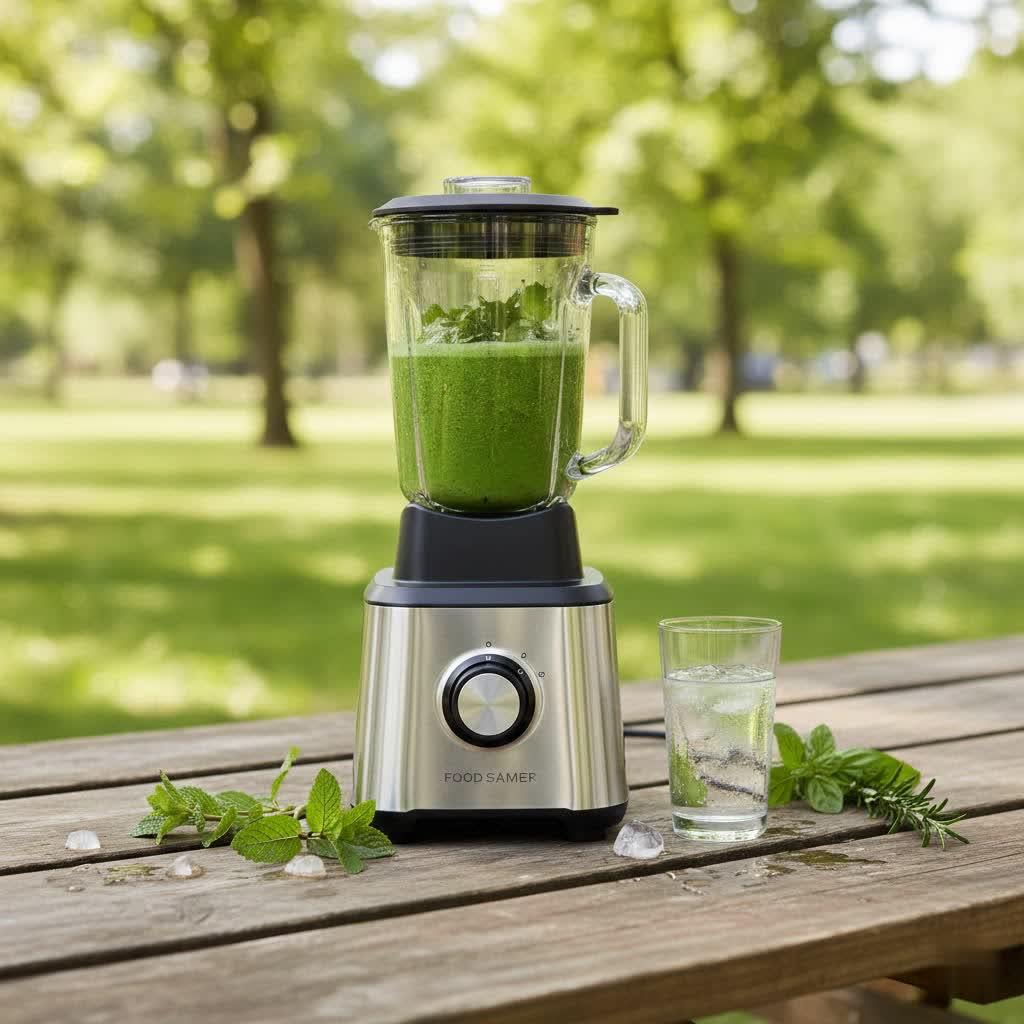
This article delves into the nuances of using a food processor as a blender. We’ll explore the fundamental differences between these two versatile machines, identify tasks where a food processor can successfully mimic a blender, and provide essential tips to achieve the best possible results. Whether you’re whipping up a quick smoothie, pureeing soup, or crafting a homemade sauce, understanding the strengths and limitations of your food processor can unlock new culinary possibilities, making your kitchen adventures more efficient and enjoyable.
Understanding Your Appliances: Food Processor vs. Blender
While both food processors and blenders feature rapidly spinning blades at their core, their design and primary functions are distinct, leading to different optimal uses. Understanding these differences is crucial when attempting to use one as a substitute for the other.
A food processor is a versatile countertop appliance typically designed for chopping, slicing, shredding, dicing, and mixing various ingredients. It generally comes with a wide work bowl and an S-shaped blade that covers a significant portion of the bowl’s diameter, along with multiple attachments for specific tasks like grating or kneading dough. Food processors excel at handling thicker, drier ingredients, breaking them down into uniform pieces or mixing them thoroughly without necessarily liquefying them. They are fantastic for tasks like making hummus, chopping vegetables for salsa, preparing pie crusts, or shredding cheese.
In contrast, a blender is primarily engineered to liquefy ingredients, producing silky-smooth purees, sauces, and drinks. Blenders are characterized by their tall, narrow jar and smaller, sharper blades positioned at the bottom, which spin at high speeds to create a powerful vortex. This vortex continuously draws ingredients downwards towards the blades, ensuring an incredibly smooth and homogenous mixture. Blenders require a certain amount of liquid to operate efficiently and are the preferred choice for smoothies, creamy soups, milkshakes, and crushing ice.
The core distinction lies in their mechanics: food processors “chop” and “mix” with slower, wider sweeps, while blenders “pulverize” and “liquefy” with faster, more concentrated action, aided by the unique shape of their container.
When Your Food Processor Can Act as a Blender: Benefits and Best Uses
While a food processor isn’t a perfect substitute for a blender, it can certainly handle several blending-like tasks, offering a convenient workaround when a blender isn’t available or when you prefer a thicker consistency. The key is understanding its capabilities and adjusting your expectations.
One of the primary benefits of using a food processor for blending tasks is its inherent versatility. If kitchen space is limited or you’re looking to minimize appliance clutter, knowing your food processor can handle some blending duties is a huge advantage. It can save you from purchasing an additional appliance, making it a cost-effective solution for many households.
Food processors are particularly effective for:
- Thicker Purees: For pureeing cooked vegetables for soups or sauces where a slightly chunkier or rustic texture is desired, a food processor can get the job done. Think of butternut squash soup or a robust tomato sauce.
- Nut Butters: Its powerful motor and wide bowl make a food processor excellent for grinding nuts into smooth, creamy nut butter. The blades efficiently process the nuts, releasing their natural oils to create a spreadable consistency.
- Pesto and Dips: The “S”-blade is ideal for finely chopping herbs, garlic, nuts, and cheese, then incorporating oil to create a perfectly textured pesto or a chunky dip like guacamole or hummus.
- Homemade Baby Food: Pureeing cooked fruits and vegetables into baby food is another task well-suited for a food processor, especially if you prefer a slightly thicker consistency.
- Smoothies (with caveats): While blenders are superior for ultra-smooth smoothies, a food processor can create drinkable smoothies, particularly if you use softer fruits and ample liquid. You might not achieve the same silky texture, especially with fibrous ingredients or seeds, but it’s a viable option in a pinch.
“A food processor can definitely bridge the gap for many blending tasks, especially when a super-smooth texture isn’t the absolute priority. It’s a testament to its fundamental chopping power.” – Chef Sarah Chen, Culinary Equipment Specialist
Limitations of Using a Food Processor as a Blender
|
Our Picks for the Best Food Blender in 2026
As an Amazon Associate I earn from qualifying purchases.
|
||
| Num | Product | Action |
|---|---|---|
| 1 | Countertop Blender, 2000W High-Power Smoothie Blender with 68oz BPA-Free Jar, 28,000 RPM, Variable Speed & Pulse, 8-Blade Stainless Steel, Tamper Included, Quick Self-Cleaning, Dishwasher-Safe Jar |

|
| 2 | Hamilton Beach Power Elite Wave Action Blender For Smoothies, 40 Oz Glass Jar, 12 Functions Including Puree, Crush Ice, 700 Watts - Black (58148A) |
|
| 3 | BLACK+DECKER Countertop Blender with 6-Cup Glass Jar, 10-Speed Settings, Black, BL2010BG |
|
| 4 | Vitamix Ascent X5 Blender with 10 Blending Programs, Self-Cleaning Program, Professional-Grade Blender for Smoothies, Soups and More, Stainless-Steel Blades, 48 Oz Container, Brushed Stainless |
|
| 5 | Vitamix Explorian E310 Blender, Professional-Grade Kitchen Blender for Smoothies, Soups, Juices and More, 10-Speed, Stainless Steel Blades, Self-Cleaning Kitchen Appliance, 48 Oz Container, Black |
|
| 6 | BLACK+DECKER PowerCrush Multi-Function Blender with 6-Cup Glass Jar, 4 Speed Settings, Silver |
|
| 7 | Ninja Fit Compact Personal Blender, Portable Blender for-Smoothies, Shakes, Food Prep, and Frozen Blending, 700-Watt Base, (2) 16-oz. Cups and Spout Lids, Black QB3001SS |
|
| 8 | Ninja Mega Kitchen System, 1500W, 72 oz. Full-Size Blender & 8-Cup Food Processor with (2) 16 oz. Cups , Black, BL770 |
|
| 9 | Ninja Professional Blender 1000W, Total Crushing Technology- Smoothies, Ice Crushing & Frozen Fruit, Full-Size Countertop Blender, 72-oz. Pitcher, Black & Grey, BL610 |
|
| 10 | Turelar Immersion Blender Handheld Corded Hand Blenders Set 1100W, Trigger Variable Speed 5 in 1 Stick Emulsifier with Chopper, Whisk and Frother for Soup, Baby Food and Smoothies |
|
Despite its versatility, a food processor has inherent limitations that prevent it from being a complete stand-in for a blender, particularly for certain recipes. Recognizing these drawbacks will help you manage expectations and avoid frustration.
The most significant limitation is texture. Food processors, with their wider bowls and S-shaped blades, are designed for chopping and processing rather than creating a smooth, homogeneous liquid. This means that achieving the silky-smooth consistency of a blender-made smoothie or creamy soup can be challenging, if not impossible. Ingredients like leafy greens, berries with tiny seeds, or fibrous fruits tend to remain slightly chunky, even after extended processing.
Liquid handling is another major difference. Blenders thrive with liquids, creating a powerful vortex that draws ingredients down. Food processors, however, can struggle with high volumes of liquid dueess to their wider, shallower bowls and less powerful vortex action. Overfilling a food processor with liquid can lead to leaks or an uneven blend, as the liquid might slosh around the blades without being properly incorporated.
Furthermore, crushing ice is typically a blender’s domain. Most food processors are not equipped with blades fast or strong enough to efficiently crush ice, often resulting in unevenly chopped ice or potential damage to the blades or motor. For cold, thick textures, frozen fruit is a much better alternative in a food processor.
Finally, the processing time might be longer, and you may need to stop and scrape down the sides of the bowl more frequently to ensure all ingredients come into contact with the blades. This is especially true for ingredients that stick to the sides, requiring manual intervention to achieve a more consistent blend.
Key Considerations When Using a Food Processor for Blending Tasks (Buying Guide)
When contemplating using your food processor for blending tasks, or if you’re in the market for a food processor with stronger “blending” capabilities, several factors should guide your decision. These considerations will help you maximize your appliance’s potential and ensure it meets your specific culinary needs.
Power and Speed Settings
The wattage or horsepower of your food processor’s motor directly impacts its ability to process ingredients. A more powerful motor (e.g., 700 watts or higher for a standard food processor) will handle denser and tougher ingredients more efficiently, mimicking a blender’s power for tasks like pureeing. Look for models with variable speed settings or a “pulse” function, which gives you greater control over the consistency. Lower speeds are ideal for starting to break down solids, while a continuous high speed can help achieve a smoother result over time, especially with added liquid.
Blade Design and Material
Most food processors come with an S-shaped chopping blade, usually made of stainless steel. For blending tasks, a sharp, sturdy stainless steel blade is crucial. Some advanced food processors might offer specialized blades or attachments designed for pureeing, which can improve results. While traditional food processor blades aren’t designed to create the same vortex as blender blades, their sharpness and the motor’s power are still key.
Bowl Material and Capacity
Cối xay (bowl material) is important for durability and safety.
- Plastic bowls (BPA-free Tritan) are common, lightweight, and shatter-resistant.
- Glass bowls offer a more traditional feel, are scratch-resistant, and won’t absorb odors, but they are heavier and more fragile.
Regardless of material, ensure the bowl is clearly marked with a maximum fill line. When using a food processor for liquids, never exceed this line, as overfilling can lead to spills and inefficient blending. A larger capacity bowl (e.g., 12-14 cups) might allow for processing larger batches, but remember that for liquids, you’ll still need to work within the liquid fill limits.
Additional Features and Attachments
Some food processors come with attachments that can enhance their versatility for blending. While a dedicated blender attachment is rare for food processors (the Vitamix food processor attachment is an example of a system that uses a blender base with a food processor bowl), features like a wide feed chute allow you to easily add liquids or smaller ingredients while the machine is running, which can be beneficial for emulsifying or gradually adding components to a puree. Safety features like automatic shut-off and lid locks are also important for any kitchen appliance.
Brand Reputation and Price Point
Investing in a reputable brand often means better build quality, a more powerful motor, and better customer support. Brands like KitchenAid, Breville, and Cuisinart are well-regarded for their food processors. Price can vary significantly based on capacity, power, and included attachments. Consider your budget and the frequency of use. If you plan to heavily rely on your food processor for blending, a mid-to-high-range model with robust features might be a worthwhile investment.
Food Processor vs. Blender: A Detailed Comparison
Understanding the fundamental differences between a food processor and a blender is essential for making an informed choice, especially if you’re considering using one in place of the other. Here’s a detailed comparison of their key attributes:
| Feature | Food Processor | Blender |
|---|---|---|
| Primary Function | Chopping, slicing, shredding, grating, mixing, kneading | Pureeing, liquefying, emulsifying, crushing ice |
| Ideal for | Hummus, pesto, dough, salsas, chopped vegetables, nut butter, chunky soups, coarse purees | Smoothies, creamy soups, sauces, milkshakes, baby food, nut milks, crushed ice |
| Blade Type | S-shaped blade (often multiple attachments for slicing/grating) | Multi-pronged blade, fixed at the bottom, angled upwards |
| Bowl/Jar Shape | Wide, cylindrical work bowl | Tall, narrow jar, often with a pour spout |
| Liquid Handling | Handles less liquid; not ideal for high volumes | Excels with liquids; requires liquid for vortex |
| Texture Achieved | Chunky, coarse, or thick; less smooth | Silky-smooth, homogeneous, liquid |
| Speed | Generally lower speeds; more about precision chopping | Higher speeds, designed for pulverizing |
| Ice Crushing | Not recommended; can damage blades/motor | Excellent, especially high-powered models |
| Key Advantage | Versatility for prep tasks | Superior smoothness and liquid processing |
While some tasks can overlap, like making purees or certain dips, the tools’ core design dictates their optimal performance. For anything requiring an exceptionally smooth, drinkable consistency or efficient ice crushing, a blender remains the undisputed champion. For solid food preparation, versatility, and thicker mixtures, the food processor shines.
Tips for Using Your Food Processor as a Blender and Maintenance
If you’re relying on your food processor for blending tasks, adopting specific techniques can significantly improve your results. Proper maintenance is also key to ensuring the longevity and optimal performance of your appliance, regardless of its primary use.
Mastering the Blend: Tips for Optimal Results
- Add Liquid First (or enough liquid): Unlike blenders that create a vortex to pull solids down, food processors benefit from having liquids at the bottom to help the blades move ingredients around. If making a smoothie, start with your liquid base (water, milk, juice) before adding solids. For other purees, ensure there’s sufficient moisture.
- Cut Ingredients into Smaller Pieces: Large, tough chunks of fruit, vegetables, or ice (if you dare) will be harder for your food processor to handle. Pre-chop ingredients into smaller, more uniform pieces to facilitate smoother processing and reduce strain on the motor. For leafy greens, tear them into smaller bits.
- Don’t Overfill the Work Bowl: Overfilling, especially with liquids, can lead to uneven blending and potential spills. Stick to the maximum fill line, typically lower for liquids in a food processor than in a blender. Processing in smaller batches is often more effective.
- Use the “Pulse” Function: Instead of continuous blending, use short pulses, especially at the beginning. This allows you to control the consistency, prevent overheating, and ensure ingredients are evenly chopped before attempting a smoother puree. After initial pulsing, you can switch to a continuous low-speed setting.
- Scrape Down the Sides: Ingredients, particularly thicker ones, tend to stick to the sides of the work bowl. Periodically stop the machine and use a rubber spatula to scrape down the sides, pushing ingredients back towards the blades for a more consistent blend.
- Opt for Frozen Fruit Over Ice: As food processors aren’t designed for crushing ice, use frozen fruits like bananas, berries, or mango chunks to achieve a cold, thick texture in smoothies without risking damage to your appliance.
- Adjust Expectations: Remember that a food processor is unlikely to produce the same silky-smooth, liquid consistency as a powerful blender. Embrace a slightly thicker or coarser texture for your blended creations.
Proper Care and Maintenance
- Immediate Cleaning: Clean your food processor immediately after use. Food particles can dry and become difficult to remove, especially from blades and crevices.
- Disassemble Carefully: Always unplug the appliance before disassembling. Handle blades with extreme caution; they are very sharp. Most work bowls, lids, and blades are dishwasher-safe, but check your manufacturer’s instructions.
- Handwashing Blades: For delicate blades or to preserve their sharpness, handwash with warm, soapy water and a brush. Store blades safely to prevent accidental cuts.
- Wipe Down Base: The motor base should never be immersed in water. Wipe it clean with a damp cloth and mild detergent, then dry thoroughly.
- Regular Checks: Periodically inspect the power cord for any damage and ensure all parts fit together securely.
- Avoid Overheating: If your food processor’s motor starts to sound strained or smells hot, turn it off immediately and let it cool down before continuing. This prevents motor burnout.
By following these tips, you can effectively use your food processor for a wider range of blending tasks and keep it in excellent working condition for years to come.
Conclusion
The question of whether a food processor can truly replace a blender is nuanced. While these kitchen workhorses are fundamentally designed for different tasks, a food processor can certainly step up to the plate for many blending-like applications, especially when a perfectly silky-smooth consistency isn’t the ultimate goal. From crafting robust pureed soups and homemade nut butters to thicker sauces and even certain smoothies, its versatility as a “blender in a pinch” makes it an invaluable asset in any kitchen.
However, it’s crucial to acknowledge the inherent limitations regarding liquid handling, ice crushing, and achieving that ultra-fine blend only a dedicated blender can provide. By understanding the distinct mechanics of each appliance and implementing smart techniques—like proper ingredient preparation, judicious liquid addition, and thoughtful batch processing—you can unlock the full potential of your food processor. Embrace its capabilities and adapt your recipes, and you’ll find that this single appliance offers remarkable flexibility, making your culinary journey both easier and more creative.
What culinary creation will you experiment with first, utilizing your food processor’s hidden blending talents?
Frequently Asked Questions
Can I make smoothies in a food processor?
Yes, you can make smoothies in a food processor, but the texture might be thicker and less smooth than with a blender. For best results, add liquids first, chop ingredients finely, use frozen fruit instead of ice, and scrape down the sides frequently.
What’s the main difference in texture between food processor and blender results?
Blenders are designed to create exceptionally smooth, liquid, and homogeneous textures due to their high-speed blades and vortex action. Food processors, on the other hand, typically produce chunkier, thicker, or coarser textures, as their blades are optimized for chopping and mixing rather than liquefying.
Is it safe to put hot liquids in a food processor?
You can process hot liquids in a food processor, but it’s crucial to do so in small batches to prevent pressure buildup and potential spills. Ensure the lid is securely latched, and consider removing the feed tube pusher to allow steam to escape while covering the opening with a kitchen towel.
Can a food processor crush ice?
Most food processors are not designed to crush ice effectively. Their blades and motor speeds are typically not powerful enough, and attempting to crush ice can result in uneven chunks or even damage to the appliance. Using frozen fruit is a better alternative for achieving cold, thick results.
For what tasks is a food processor actually better than a blender?
A food processor excels at tasks requiring chopping, slicing, shredding, grating, and mixing thicker ingredients. It’s superior for making hummus, pesto, dough, salsas, chopping vegetables, and creating chunky purees, where its wide bowl and powerful S-blade provide better control and efficiency.
