Stepping into the world of kitchen gadgets, you’ve likely faced the classic dilemma: food processor or blender? These two powerhouses promise to simplify your culinary life, yet their functions often seem to overlap, leaving many home cooks confused about which one truly deserves a spot on their countertop. But fear not, understanding their unique strengths and capabilities is the key to unlocking a world of effortless meal preparation and delicious creations. This comprehensive guide will help you decipher the nuances, allowing you to choose the perfect appliance—or perhaps both—to elevate your cooking experience.
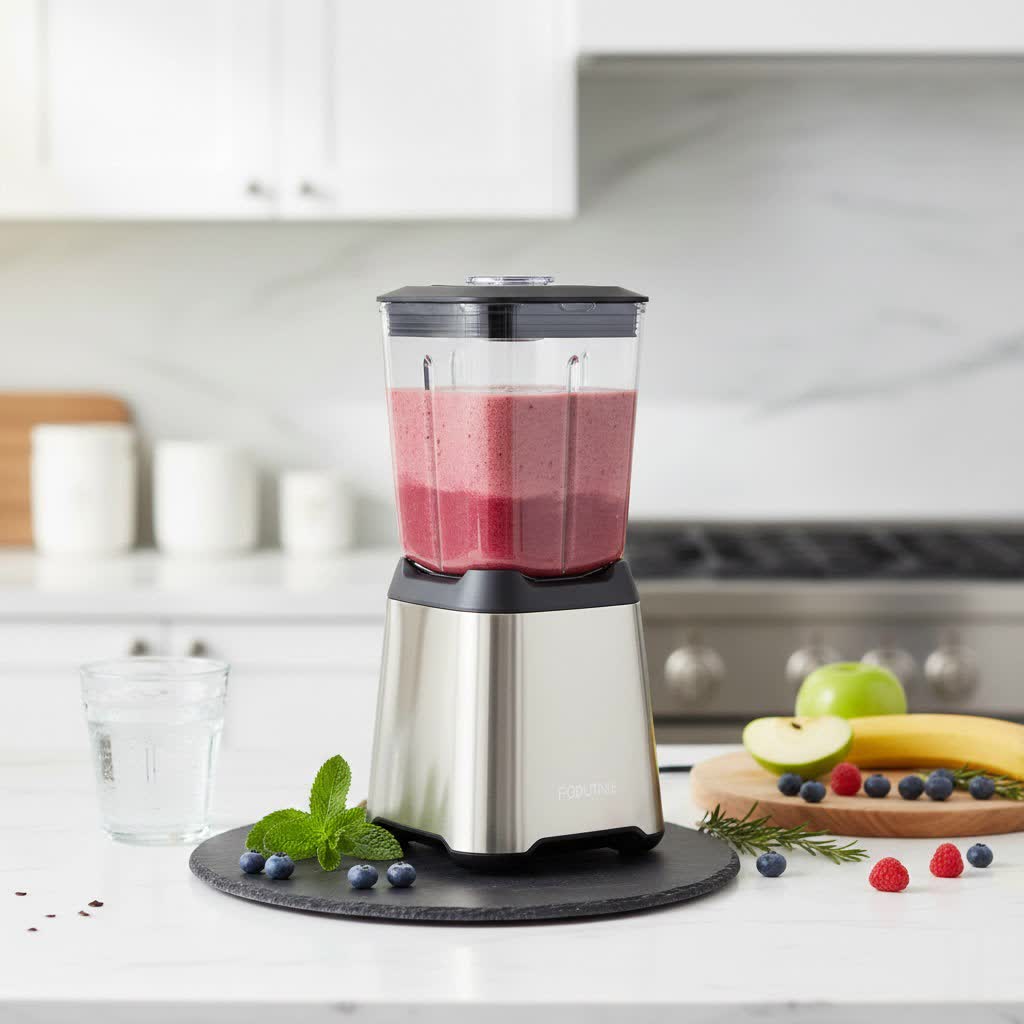
Overview of Food Blenders and Food Processors
At first glance, both blenders and food processors might appear similar, utilizing spinning blades to transform ingredients. However, their fundamental design and primary purposes set them distinctly apart.
A food blender is predominantly designed for liquefying. Its tall, narrow jar and rapidly spinning blades create a powerful vortex, pulling ingredients down towards the blades for an ultra-smooth consistency. Think of it as your go-to for anything sippable or pourable.
Conversely, a food processor is built for versatility in food preparation. Featuring a wider, shallower work bowl and an array of interchangeable blades and discs, it’s engineered to perform a multitude of tasks beyond just blending. It’s your ultimate kitchen assistant for tasks that require more control over texture and form.
Throughout their history, both appliances have evolved from simple manual devices to sophisticated electric machines with varied speeds, pulse functions, and specialized attachments, making them indispensable tools in modern kitchens.
Benefits When Using Each Appliance
Both blenders and food processors significantly cut down on manual labor, offering distinct advantages depending on your culinary goals.
Benefits of a Food Processor
A food processor excels at tasks that demand precision and strength, making it a true workhorse for meal prep:
- Time and Effort Savings: It dramatically reduces the time spent on chopping, slicing, and shredding, automating tedious manual knife work.
- Versatile Prep: With various attachments, a food processor can handle a wide range of tasks, from thinly slicing vegetables for salads to shredding cheese and even kneading dough.
- Texture Control: Unlike blenders, food processors offer more control over the final texture, allowing for chunky salsas, finely chopped nuts, or thick, creamy spreads like hummus.
- Handling Dry and Thick Ingredients: It processes dense or dry ingredients without the need for added liquids, such as grinding oats into flour or turning stale bread into breadcrumbs.
|
Our Picks for the Best Food Blender in 2026
As an Amazon Associate I earn from qualifying purchases.
|
||
| Num | Product | Action |
|---|---|---|
| 1 | BLACK+DECKER Countertop Blender with 6-Cup Glass Jar, 10-Speed Settings, Black, BL2010BG |

|
| 2 | Hamilton Beach Power Elite Wave Action Blender For Smoothies, 40 Oz Glass Jar, 12 Functions Including Puree, Crush Ice, 700 Watts - Black (58148A) |
|
| 3 | Vitamix Explorian E310 Blender, Professional-Grade Kitchen Blender for Smoothies, Soups, Juices and More, 10-Speed, Stainless Steel Blades, Self-Cleaning Kitchen Appliance, 48 Oz Container, Black |
|
| 4 | Ninja Fit Compact Personal Blender, Portable Blender for-Smoothies, Shakes, Food Prep, and Frozen Blending, 700-Watt Base, (2) 16-oz. Cups and Spout Lids, Black QB3001SS |
|
| 5 | Ninja Professional Blender 1000W, Total Crushing Technology- Smoothies, Ice Crushing & Frozen Fruit, Full-Size Countertop Blender, 72-oz. Pitcher, Black & Grey, BL610 |
|
| 6 | Turelar Immersion Blender Handheld Corded Hand Blenders Set 1100W, Trigger Variable Speed 5 in 1 Stick Emulsifier with Chopper, Whisk and Frother for Soup, Baby Food and Smoothies |
|
| 7 | Vitamix Ascent X5 Blender with 10 Blending Programs, Self-Cleaning Program, Professional-Grade Blender for Smoothies, Soups and More, Stainless-Steel Blades, 48 Oz Container, Brushed Stainless |
|
| 8 | Ninja Mega Kitchen System, 1500W, 72 oz. Full-Size Blender & 8-Cup Food Processor with (2) 16 oz. Cups , Black, BL770 |
|
| 9 | Countertop Blender, 2000W High-Power Smoothie Blender with 68oz BPA-Free Jar, 28,000 RPM, Variable Speed & Pulse, 8-Blade Stainless Steel, Tamper Included, Quick Self-Cleaning, Dishwasher-Safe Jar |
|
| 10 | BLACK+DECKER PowerCrush Multi-Function Blender with 6-Cup Glass Jar, 4 Speed Settings, Silver |
|
Benefits of a Blender
Blenders shine when your recipe calls for smooth, uniform liquids or finely crushed solids:
- Silky Smooth Consistencies: They are unmatched in creating perfectly smooth purees, ideal for creamy soups, baby food, and fruit purees.
- Effortless Beverages: From daily smoothies and protein shakes to frozen cocktails and milkshakes, blenders are built for drinkable creations.
- Crushing Ice: High-powered blenders can effortlessly crush ice for frosty drinks, a task that can damage a food processor’s blades.
- Emulsifying Liquids: They excel at combining liquids that don’t naturally mix, like oil and vinegar for salad dressings, creating stable emulsions.
- Handling Hot Liquids: Many blenders come with heat-resistant glass or sturdy plastic jars, making them safe for pureeing hot soups directly after cooking.
Key Criteria When Choosing Your Kitchen Companion
Deciding between a food processor and a blender, or even investing in both, hinges on understanding your primary cooking needs and considering several key features.
Power and Speed
The motor’s power and speed settings are crucial indicators of an appliance’s capability.
- Blenders typically feature high-speed motors (often over 20,000 RPM for high-powered models) designed to pulverize ingredients quickly, creating smooth, homogenous mixtures. Multiple speed settings and a pulse function allow for varying degrees of blending.
- Food Processors prioritize torque over sheer speed. Their motors are geared to handle dense, heavy loads with less liquid, such as kneading dough or chopping hard vegetables. While they have speed settings, their blades rotate slower than a blender’s to ensure precise cuts rather than pureeing.
Container Material
The material of the work bowl or jar affects durability, safety, and ease of cleaning.
- Blender Jars are commonly made from sturdy plastic (like Tritan), glass, or sometimes stainless steel. Glass is excellent for blending hot liquids and resists odors and stains, while Tritan plastic is lightweight and highly durable.
- Food Processor Bowls are almost exclusively made from durable, clear plastic, often Tritan. This allows you to monitor the processing progress and provides the necessary robustness for chopping and kneading. Ensure the material is BPA-free for safety.
Blades and Attachments
This is where the functional differences become most apparent.
- Blender Blades are usually fixed at the bottom of the jar, designed to create a vortex that continuously draws ingredients into the spinning blades for thorough processing. High-end blenders may have uniquely angled blades for superior pulverization.
- Food Processor Blades and Discs are where their versatility truly shines. The standard S-shaped blade is perfect for chopping, pureeing, and mixing. However, food processors often come with a variety of interchangeable discs for slicing (thin or thick), shredding (fine or coarse), grating, and even a dough blade for kneading. This array of tools makes them incredibly adaptable.
Capacity
Consider your household size and typical batch sizes when choosing capacity.
- Blenders range from compact personal blenders (around 2 cups) perfect for single servings, to large family-sized jars (up to 8-14 cups) for bigger batches of soups or smoothies.
- Food Processors generally have larger capacities, starting from mini-choppers (2-5 cups) for small tasks, to standard models (8-14 cups), and even commercial-grade machines (16+ cups). Larger capacities are ideal for extensive meal prep or entertaining.
Additional Features
Modern appliances often include features that enhance convenience and safety.
- Pulse Function: Essential for both, offering intermittent bursts of power for better control over texture (e.g., chunky salsa or coarsely chopped nuts).
- Pre-set Programs: Some high-end blenders and food processors offer specific settings for smoothies, ice crush, purees, or dough, simplifying operation.
- Safety Locks: Most units require the lid to be securely locked in place before operation, preventing accidents.
- Easy Cleaning: Look for dishwasher-safe components and designs that minimize crevices where food can get trapped.
Brand and Price
The market offers a wide spectrum of brands and price points, catering to different budgets and quality expectations. Reputable brands often provide better durability, performance, and customer support. While blenders can range from approximately $35 to $550, and food processors from $40 to $400, your budget should align with how frequently and intensively you plan to use the appliance. Investing in a higher-quality model can be cost-effective in the long run if it sees regular use and offers superior performance.
Comparison: Food Processor vs. Blender at a Glance
To quickly distinguish between these two kitchen staples, here’s a breakdown of their core characteristics and ideal uses:
| Feature | Food Processor | Blender |
|---|---|---|
| Primary Function | Chopping, slicing, shredding, grating, mixing, kneading | Liquefying, pureeing, emulsifying, crushing ice |
| Best For | Thick batters, doughs, chunky salsas, hummus, nut butters, chopped vegetables, shredded cheese | Smoothies, soups, sauces, purees, milkshakes, frozen drinks, baby food |
| Liquid Handling | Handles minimal liquid; can leak with large amounts of thin liquid. Excels with dry/dense ingredients. | Requires liquid to create a vortex; ideal for liquid-rich mixtures. |
| Blade Design | Removable S-shaped blade (chopping), various interchangeable discs (slicing, shredding, grating). High torque, lower speed. | Fixed, often multi-pronged blades at the bottom of a tall jar. High speed, creates a vortex. |
| Texture Control | Excellent for varied textures, from coarse chop to fine puree. | Primarily creates very smooth, uniform textures. |
| Container Shape | Wide, shallow work bowl | Tall, narrow jar |
| Common Tasks | Preparing vegetables for stir-fries, making pie crust, shredding coleslaw, grinding meat, making pesto. | Blending fruit and ice for smoothies, pureeing cooked vegetables for soup, making salad dressing. |
Top Kitchen Appliances for Every Culinary Need
While we can’t recommend specific models without knowing your exact preferences and budget, understanding the categories and features that define top-tier blenders and food processors can guide your choice.
For those who prioritize smoothies and liquid-based meals, a high-performance blender is essential. Look for models with powerful motors (1000+ watts), durable jars (often Tritan or glass), and variable speed controls to achieve desired consistencies, from chunky to silky. Brands known for their blending prowess often offer excellent warranties and customer support.
If extensive meal prep, baking, or diverse culinary tasks are your focus, a versatile food processor will be invaluable. Opt for models with robust motors, a large capacity (12-14 cups), and a comprehensive set of attachments including multiple slicing/shredding discs and a dough blade. A wide feed chute is a bonus for easily adding larger ingredients.
For those with limited kitchen space or occasional use, compact or mini food processors and personal blenders offer convenience without sacrificing too much power. Some innovative brands also offer combination units or attachments that allow a blender base to function as a food processor, providing a space-saving solution for those who want both functionalities.
Consider your daily routine: if morning smoothies are non-negotiable, prioritize a powerful blender. If weekend meal prepping involves chopping piles of vegetables, a sturdy food processor is your best friend.
How to Use and Maintain Your Food Processor or Blender Correctly
Proper usage and maintenance are key to maximizing the lifespan and performance of your kitchen appliances.
Safe and Effective Usage
- Read the Manual: Always familiarize yourself with your specific model’s instructions, especially regarding maximum fill lines and appropriate attachments for different tasks.
- Secure Lids: Ensure the lid is properly locked before operating either appliance to prevent splashes and ensure safety.
- Don’t Overload: Overfilling can strain the motor and lead to uneven processing. Work in batches if necessary.
- Use Pulse Function: For food processors, the pulse function is crucial for achieving desired textures (e.g., chunky salsa) without over-processing. For blenders, it helps break down larger pieces before continuous blending.
- Add Liquids Correctly: With blenders, always add liquids first or along with solids to facilitate the vortex action. For food processors, add liquids gradually through the feed tube while running, if required for sauces or emulsions.
- Avoid Hard Items in Food Processors: While food processors are strong, avoid routinely processing extremely hard items like whole coffee beans or large chunks of ice, as this can dull the blades over time.
Cleaning and Storage
- Immediate Cleaning: Clean your appliance components immediately after use to prevent food from drying and sticking, making cleanup much easier.
- Disassembly: For food processors, carefully disassemble all parts (bowl, lid, blades, discs) before washing. Many parts are dishwasher safe, but always check the manufacturer’s guidelines.
- Blender Cleaning: For most blenders, you can add warm water and a drop of dish soap to the jar, run it for a few seconds, then rinse. For stubborn residues, manual scrubbing might be needed.
- Blade Care: Handle blades with extreme care as they are very sharp.
- Proper Storage: Ensure all components are completely dry before reassembling and storing to prevent mold or odors. Store attachments neatly to keep your kitchen organized.
Troubleshooting Common Issues
- Uneven Processing: For food processors, this often means the bowl is either too full or too empty. For blenders, not enough liquid might prevent a proper vortex.
- Motor Overheating: If you notice a burning smell or the motor stops, switch off the appliance immediately and let it cool down. This is usually a sign of overloading or extended continuous use.
- Dull Blades: Over time, blades can become dull. Some can be professionally sharpened, or you may need to purchase replacements.
Conclusion
The choice between a food processor and a blender ultimately depends on your individual cooking style, the types of dishes you prepare most often, and the textures you aim to achieve. While a blender is unmatched for creating silky-smooth liquids and drinks, a food processor stands out for its versatility in handling a wide range of prep tasks, from chopping and slicing to kneading dough. Both appliances are phenomenal time-savers and can transform your kitchen experience, making complicated recipes more accessible and everyday cooking more efficient.
Consider your culinary habits: Are you a smoothie enthusiast, a fervent baker, or a meal-prep master? Understanding these tendencies will guide you to the perfect kitchen companion. Perhaps, like many passionate home cooks, you’ll discover that owning both a food processor and a blender provides the ultimate flexibility, covering all your culinary needs. Which of these powerful tools will become your next kitchen essential?
